

Electronic Computer Yahtzee
Since its 1956 debut, Yahtzee has evolved from a tabletop favorite into a fixture of computer and electronic gaming. What began as simple text-based adaptations in the late 1970s grew into a decades-long lineage of computer Yahtzee releases across home computers, consoles, and handhelds; each one shaping how the game would eventually make its way onto smartphones and the web.
Electronic Yahtzee games solved a problem physical dice never could: automatic scoring and rule enforcement. Early computer Yahtzee programmers had to recreate something deceptively hard to fake digitally - true randomness - laying technical groundwork that's still relevant to game development today.
From the Apple II to the Commodore 64 to Hasbro's own handheld electronic Yahtzee unit, this archive traces the hardware and software that brought Yahtzee into the digital age, decades before "online Yahtzee" became a household term.
Classic Computer Yahtzee Video Games
As home computers and video game consoles began to enter the mainstream, Yahtzee made an early leap from the tabletop to the screen. Its widespread popularity and straightforward mechanics made it an ideal candidate for digital adaptation, even on primitive hardware with limited processing power.
Though it’s possible that experimental versions of Yahtzee were programmed onto massive mainframe computers before this era, the real breakthrough came with the rise of homebrew computing. In the early days of video games, hobbyist programmers in garages and local computer clubs took the initiative to digitize Yahtzee. These early efforts didn’t receive the spotlight that arcade hits like Pac-Man or Space Invaders did, but they were instrumental in keeping Yahtzee relevant and in advancing key technologies - particularly random number generation (RNG) - that remain central to digital gaming today.
Creating a convincing digital version of Yahtzee was no simple task. A real die naturally produces a random result, but replicating that randomness digitally is far more complex. Early computer systems lacked the power to generate high-quality pseudo-random numbers, resulting in predictable dice rolls and limited gameplay variety. In some cases, digital versions of Yahtzee would omit rules like the Yahtzee Bonus or Joker because of programming constraints. Still, these rudimentary versions laid the groundwork for what would eventually become the seamless, sophisticated Yahtzee online experience.
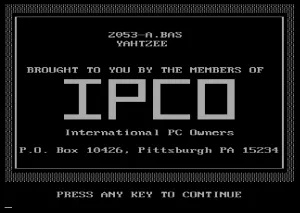
Yahtzee
DOS
1983 - International PC Owners
United States
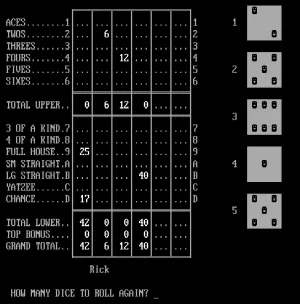
Yahtzee
DOS
1983 - International PC Owners
United States

Yahtzee
MSDOS
1985 - Homebrew
France
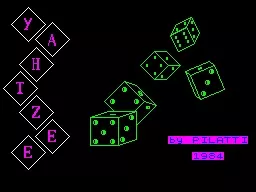
Yahtzee
MSDOS
1985 - Homebrew
Italy
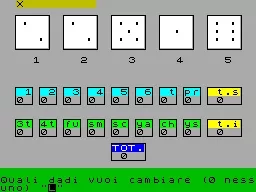
Yahtzee
MSDOS
1985 - Homebrew
Italy
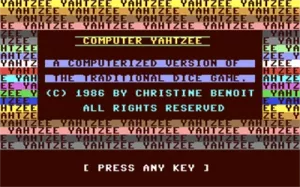
Yahtzee
MSDOS
1986 - Homebrew
United States
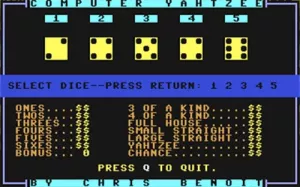
Yahtzee
MSDOS
1986 - Homebrew
United States
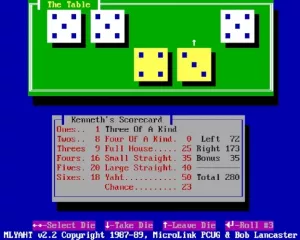
Yahtzee
MSDOS
1987 - MicroLink
United States
Yahtzee
Apple Macintosh
1990 - Homebrew
United States
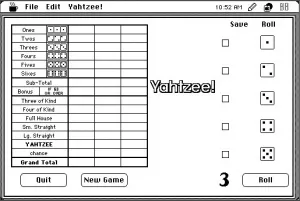
Yahtzee
Apple Macintosh
1990 - Homebrew
United States
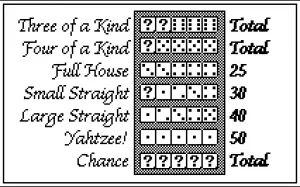
Yahtzee
Apple Macintosh
1990 - Homebrew
United States
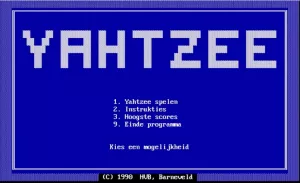
Yahtzee
MSDOS
1990 - Homebrew
Netherlands
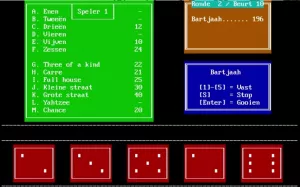
Yahtzee
MSDOS
1990 - Homebrew
Netherlands
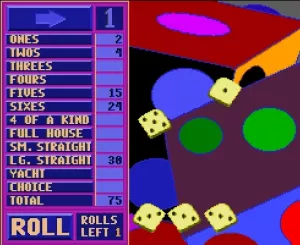
Hoyle Official Book of Games
DOS, Amiga
1991 - Sierra On-Line, Inc.
United States
Hoyle Official Book of Games
DOS, Amiga
1991 - Sierra On-Line, Inc.
United States
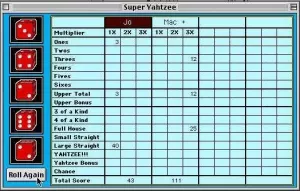
Super Yahtzee
Mac
1992 - BradCo Software
United States
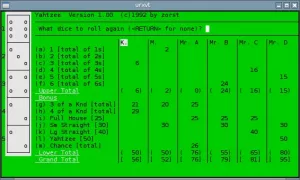
Yahtzee
MSDOS
1992 - Homebrew
United States

Mario’s Game Gallery
1995 - Presage Software
United States
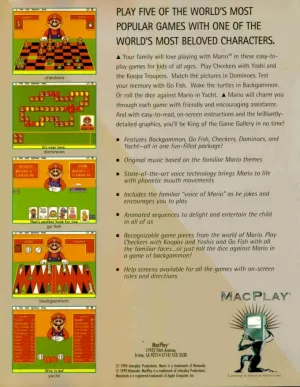
Mario’s Game Gallery
1995 - MacPlay
United States
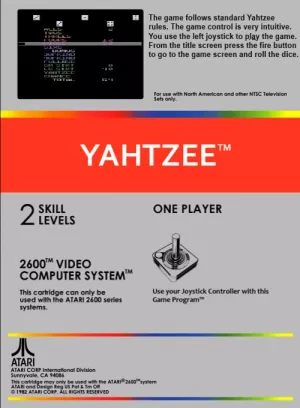
Yahtzee
Atari 2600
2000 - Homebrew
United States
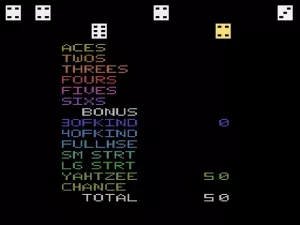
Yahtzee
Atari 2600
2000 - Homebrew
United States
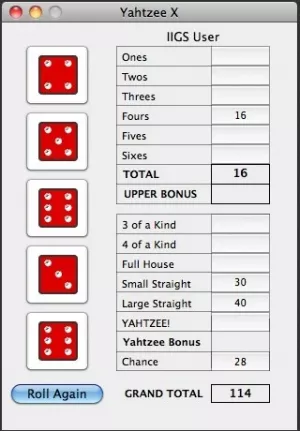
Yahtzee
Atari 2600
2000 - Homebrew
United States
Yahtzee
Apple Macintosh
2002 - Homebrew
United States
Yahtzee
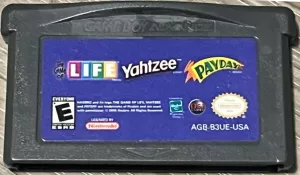
Gameboy Advance
2005 - Hasbro
United States
Yahtzee
Gameboy Advance
2005 - Hasbro
United States
Despite technical limitations, the allure of electronic Yahtzee persisted. As personal computers grew more powerful, and as video game publishers took notice, more robust adaptations of the game began to appear. These commercial releases were a mixed bag. Some stayed true to the core rules of the game, while others took creative liberties. Yet each iteration helped refine and expand the digital Yahtzee experience, introducing new players to the game and propelling it further into the digital spotlight.
Today, fans of Yahtzee online can still explore these early digital versions thanks to emulators and ROM files. Emulators allow modern computers to mimic the hardware of classic gaming systems, making it possible to relive the charm of retro Yahtzee video games. Sites like RetroArch offer a wide range of emulators, and many classic Yahtzee games are available as freeware or abandonware. However, players should always ensure they comply with copyright laws- typically, owning the original game is a prerequisite for legally downloading a ROM.
These early electronic versions are more than nostalgic curiosities; they represent a key chapter in the evolution of Yahtzee. Without them, the vibrant world of Yahtzee online as we know it might never have come to be. Their role in refining RNG systems, adapting gameplay for digital platforms, and expanding the game’s reach laid the foundation for today’s high-speed, globally connected Yahtzee experience.




Computer Yahtzee: Major Releases
Yahtzee, 1978
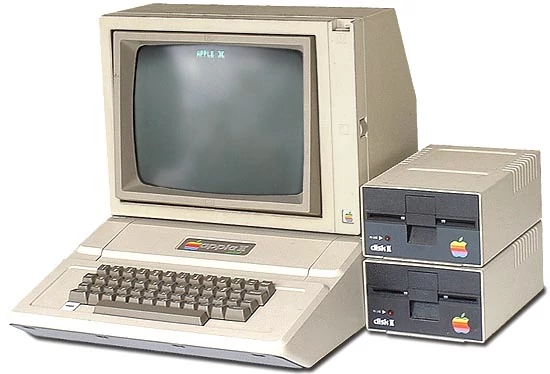
Apple II
The Apple II was personal computing’s original pioneer. Created by Steve Jobs and Steve Wozniak, the computer opened the door to software that was aimed at the general public. And thirty years later, the same company would revolutionize computing yet again with the release of the first smartphone, lighting the fuse of online Yahtzee.
Development of the Apple II began in 1976 and it hit the market the following year on June 10. The machine featured 4 KiB of RAM, upgradable to 48 KB, and retailed for a maximum of $2,638 (equivalent to $11,266 in 2020). Its claim to fame was its support of full color graphics. Personal Computer World wrote in a 1978 review that “"no-one has colour graphics like this at this sort of price". Apple’s familiar rainbow-colored corporate logo was designed as a way to emphasize this capability.
---> Play the 1978 Apple II version of Yahtzee <---
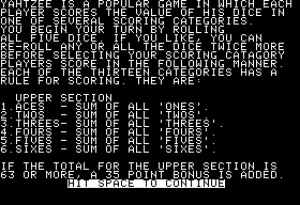
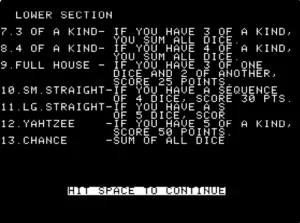
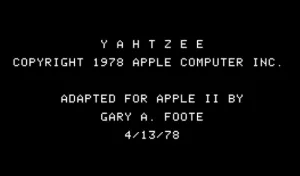
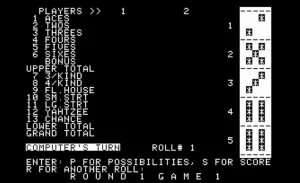
Yahtzee came out for the Apple II in 1978 and is considered to be the first video game of its kind. The game’s first step in its evolution from the tabletop to online Yahtzee was a halting one. Unfortunately, it didn’t take advantage of Apple’s color capabilities. The game was instead text-based, presented as white text on a black background. Gameplay was a standard replica of the original board game and an option was included to play Yahtzee against a computer opponent. While bells and whistles may have been lacking, robbing the game of a chance to showcase Apple II’s power, the Yahtzee game represents the initial faltering steps into a digital world.
Yahtzee
Apple II
1978 - Apple Computer Inc.
United States
Yahtzee
Apple II
1978 - Apple Computer Inc.
United States
Yahtzee
Apple II
1978 - Apple Computer Inc.
United States
Yahtzee
Apple II
1978 - Apple Computer Inc.
United States
Yahtzee, 1979
Texas Instruments TI-99/4
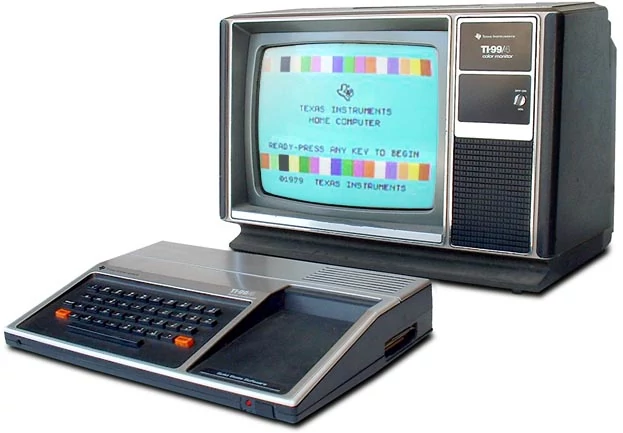
In November 1979, Texas Instruments released the world’s first 16-bit home computer, the TI-99/4. It’s “blistering fast” 3MHz CPU powered some of the day’s most interesting video games, like Parsec, Tombstone City: 21st Century, and Munch Man. Packing a paltry 16K RAM, the TI-99/4 wasn’t really a speed demon. Its primitive components were further hindered by a duplicated interpretation of its coding, making for an incredibly slow machine.
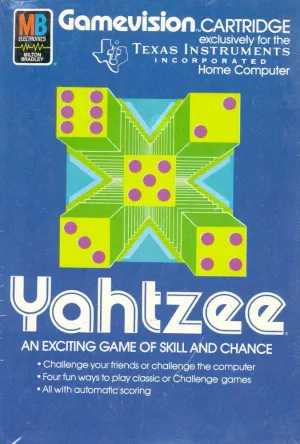
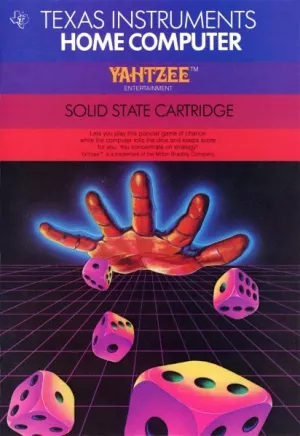
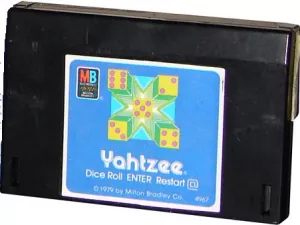
Seven game cartridges, all consisting of Milton Bradley’s Gamevision line, were available for the Texas Instruments home computer upon its launch. To capitalize on the name-recognition of its existing products, the cartridges were based on popular board games in the company’s portfolio. These types of games were slow-paced, allowing them to run more smoothly on the TI-99/4. The original lineup consisted of Yahtzee, Connect Four, Hangman, Zero Zap, Card Sharp, Stratego, and a Gamevision demonstration cartridge.
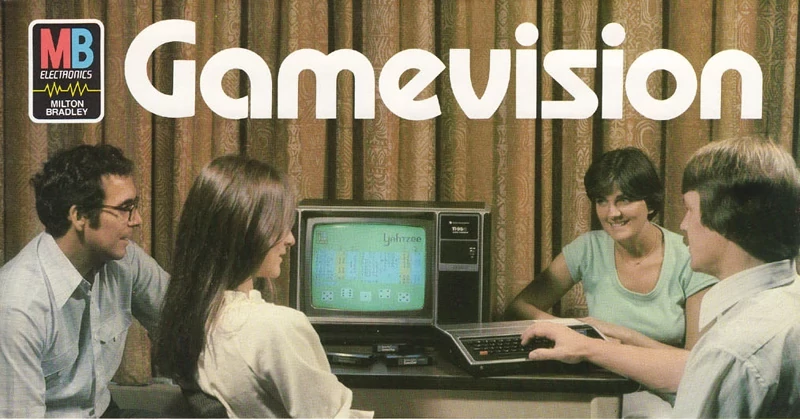
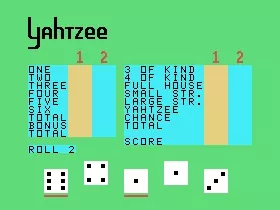
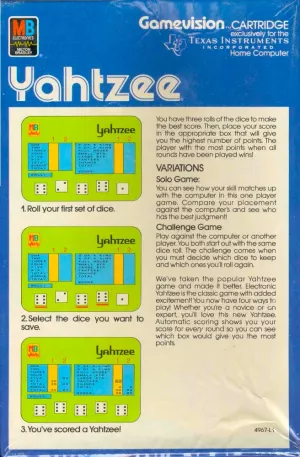
The Yahtzee computer game was true to the classic tabletop version, including proper use of the Yahtzee Bonus and Joker rules. While there was not an option to play variants like Triple Yahtzee or Word Yahtzee, the challenge game mode offered a twist. Playing the computer in one-player or against another human in two-player mode, each player will throw the same five dice on the first roll of each turn. Winning the game in Challenge mode will highlight the differences in players’ strategies.
Working for Milton Bradley Electronics, computer software programmer Elaine Henshon programmed several of the early games, including Yahtzee, Connect Four, and Stratego. The Yahtzee game retailed for $24.95. Many of the Gamevision cartridges turned out to be defective and a recall was issued. The following year, Texas Instruments independently re-released Yahtzee with a $29.95 price tag.
Milton Bradley’s initial foray into cartridge-based video games was not the huge success that it had hoped for. The TI-99/4 proved to be an unpopular gaming system, due in large part to the lag in processing speed. New systems were on the horizon and Milton Bradley was keen to try its luck with a next-generation console. All Gamevision titles were pulled from the market in 1980. Milton Bradley would bide its time until a worthy successor to the Texas Instruments TI-99/4 appeared.
Yahtzee
Gamevision
1979 - Milton Bradley
United States
Yahtzee
Gamevision
1979 - Milton Bradley
United States
Yahtzee
Gamevision
1979 - Milton Bradley
United States
Yahtzee
Gamevision
1979 - Milton Bradley
United States
Yahtzee
Gamevision
1979 - Milton Bradley
United States
Yahtzee
Gamevision
1979 - Milton Bradley
United States
Yahtzee, 1983-1991
Commodore 64
Like Texas Instruments, Commodore International manufactured other types of electronics before moving into personal computing. The jump from calculators and typewriters to home computers was made possible by the company’s acquisition of MOS Technology, the group responsible for the 6502 microprocessor that powered popular machines such as Apple II, Atari 2600, and Nintendo Entertainment System. It allowed Texas Instruments to produce their chips in house and pass their savings on to customers.
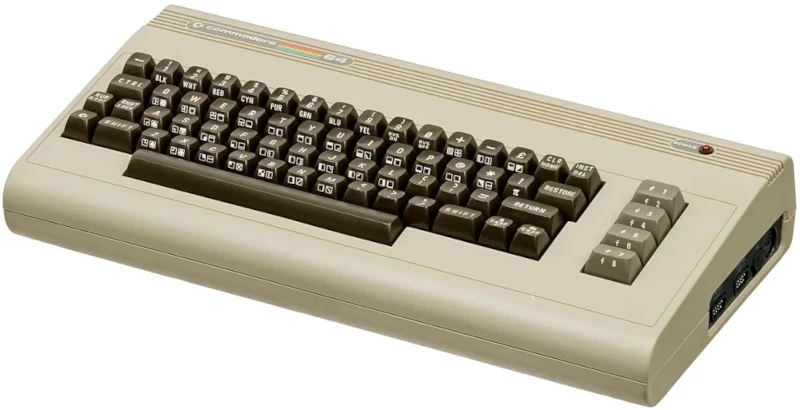
The Commodore 64, also known as the C64 or the CBM 64, was released in August 1982. It went on to become, by some claims, as the best-selling computer model of all time. During its 12-year production run, Commodore sold over 17 million computers worldwide and software developers produced over 10,000 commercial programs. The C64 retailed for just half the price of an Apple II and led the market of low- to mid-end home computers for most of the late 1980s.
No fewer than four different versions of a Yahtzee game were released for the Commodore 64. These all adhered to standard Yahtzee rules and did not include variations to the game that would come with later systems. One notable feature of the 1986 game produced by Robtek, Ltd. illustrates the types of quality control lapses that came with the whirlwind of early video game development. The game was for the English language market but Robtek also produced games in German and Dutch. The final release of Yahtzee mistakenly included a single Dutch word, confusing English-speaking gamers. The word “waarheen”, or “where to” inexplicably appears on screen when the game asks you to select the category to enter your score.
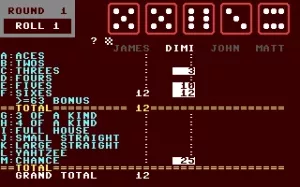
Yahtzee
Commodore 64
1983 - Osbourne/McGraw-Hill
United States
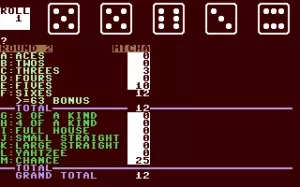
Yahtzee
Commodore 64
1984 - Personal Computer World
United States
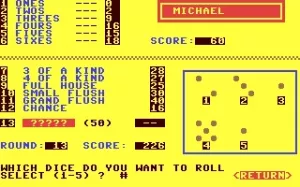
Yahtzee
Commodore 64
1986 - Robtek Ltd.
United States
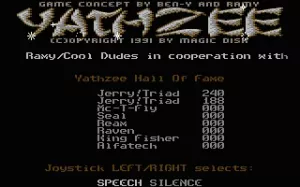
Yahtzee
Commodore 64
1991 - Magic Disk 64
United States
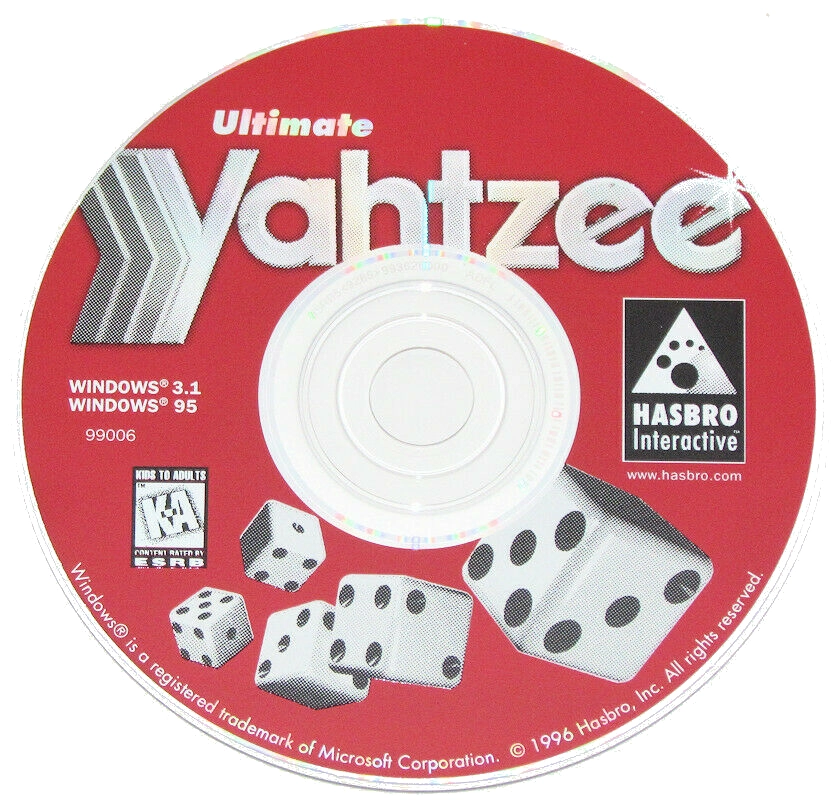
Ultimate Yahtzee, 1996
Microsoft Windows
Microsoft’s Windows 95 operating system was released to great fanfare in August 1995. It touted a much-improved graphical interface over its predecessor, Windows 3.1x, and had moved to a 32-bit architecture. What are now considered trademark features of Windows systems, such as the ‘Start’ button and taskbar made their first appearance. With the release, Windows was able to put a chokehold on the personal computing market.
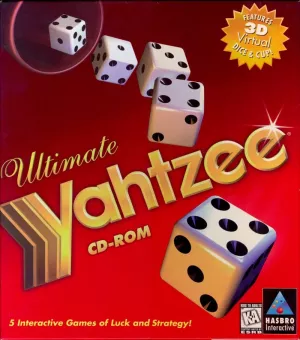
The ubiquity of Windows on the 1990s PC landscape reaped a bountiful harvest of Yahtzee games but the most memorable was 1996’s Ultimate Yahtzee. It introduced multiple game variations beyond the classic version, like Battle Yahtzee where players try to knock each other’s dice to improve their score. The first tabletop Yahtzee variation, 1972’s Triple Yahtzee, makes a memorable appearance in a video game format.
---> Play the 1996 Windows version of Yahtzee <---
Gamers applauded Ultimate Yahtzee’s attention to detail in the ability to simulate shaking the dice in the cup through use of the mouse and cursor. But as it was still early in the internet’s availability to the public, online Yahtzee was not yet brought forth unto the world.
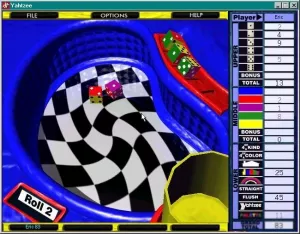
Ultimate Yahtzee
Windows 3.x
1996 - Hasbro
United States
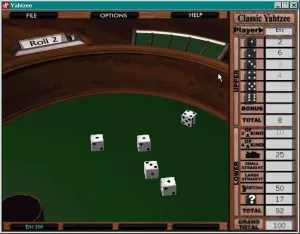
Ultimate Yahtzee
Windows 3.x
1996 - Hasbro
United States

Ultimate Yahtzee
Windows 3.x
1996 - Hasbro
United States
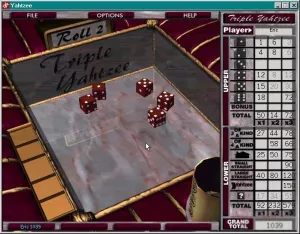
Ultimate Yahtzee
Windows 3.x
1996 - Hasbro
United States
Ultimate Yahtzee
Windows 3.x
1996 - Hasbro
United States
Family Game Night, 2008
Playstation 2
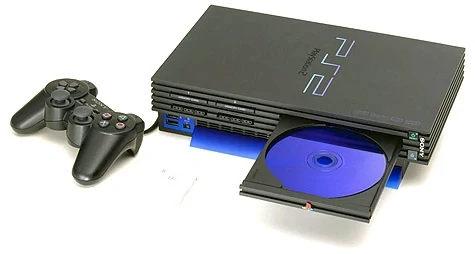
Developed and marketed by Sony Computer Entertainment, PlayStation 2 was first released in 2000 as the successor to the original PlayStation. It is the best-selling video game console of all time, having sold over 155 million units worldwide by March 31, 2012 when Sony stopped providing sales figures. Over 3,800 titles have been released for the PS2, with over 1.5 billion copies sold. Game software for the PlayStation 2 was typically distributed on DVD-ROM and its ability to play the discs served as a secondary selling point.
PlayStation 2 users were able to play some games over the Internet, using dial-up or a broadband connection. The PlayStation 2 Network Adaptor was required for the original models. Gamers complained that its online services weren’t up to snuff compared to its competitors. Sony didn’t yet have a consolidated online gaming system or store. Those were left up to the individual game developers to sort out and the results proved lackluster.
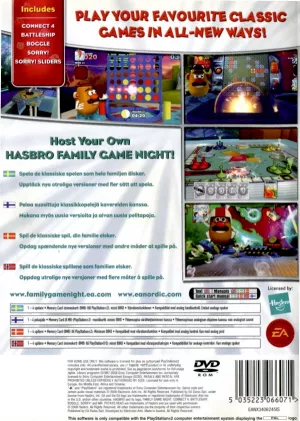
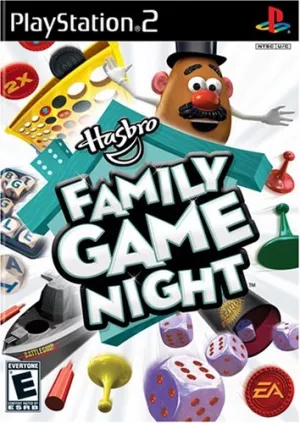
Hasbro tried to up the ante in 2008 when six classic board games were featured in the officially-licensed Family Game Night for Playstation 2, released on November 11th. The game included wireless support for multi-player competition but not a true online game option. Players could choose from Battleship, Boggle, Connect Four, Sorry!, Sorry! Sliders, and Yahtzee. A digital Xbox Live Arcade version arrived the following March, adding Scrabble to the lineup.
With such an abundance of games, there isn’t much room for Yahtzee variations but Family Game Night still had a few tricks up its sleeve. One unique feature is ‘Wild Dice’ game mode where the player can change the die to whichever number she prefers. The vibration-feedback elements in Playstation 2’s controllers are expertly utilized to enhance the simulation of a dice roll. And perhaps best of all, serving as game host and guide for all seven games in the release is none other than Mr. Potato Head himself.
Family Game Night
Playstation 2
2009 - Hasbro
Sweden
Family Game Night
Playstation 2
2009 - Hasbro
United States
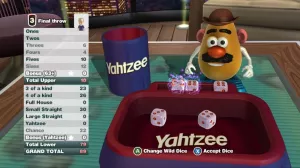
Family Game Night
Playstation 2
2009 - Hasbro
United States
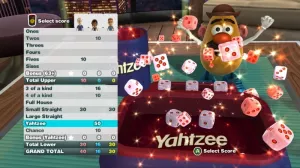
Family Game Night
Playstation 2
2009 - Hasbro
United States
Yahtzee Handheld Game
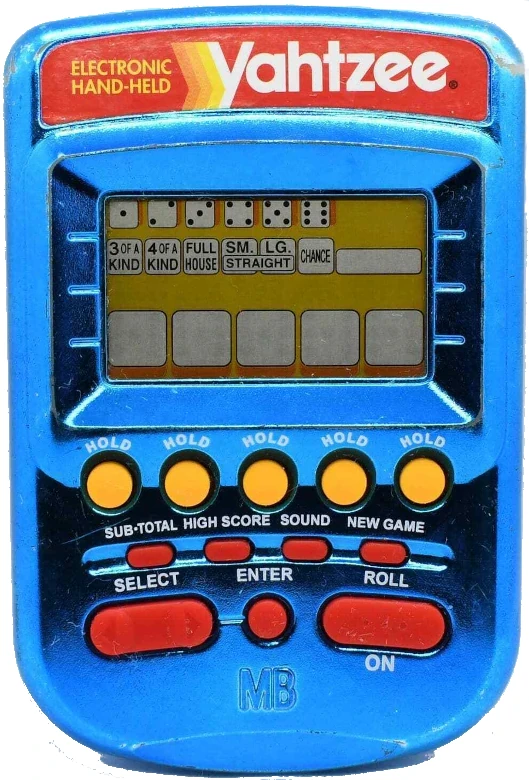
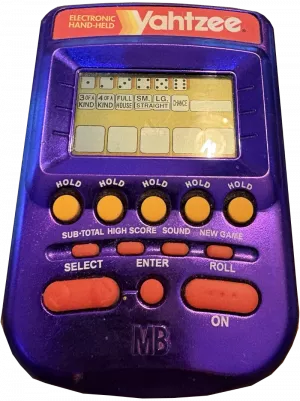
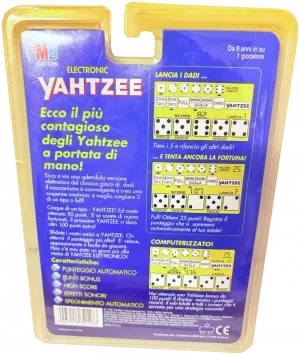
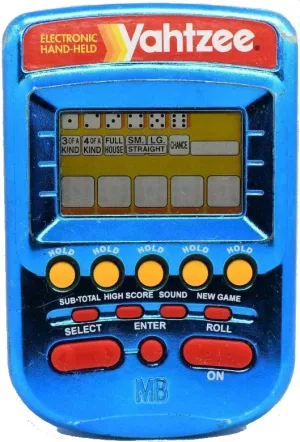
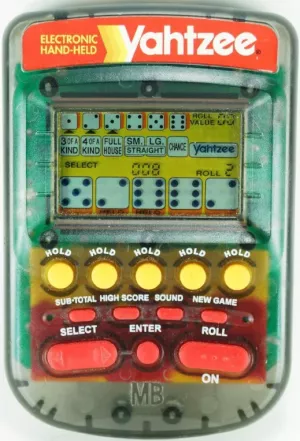
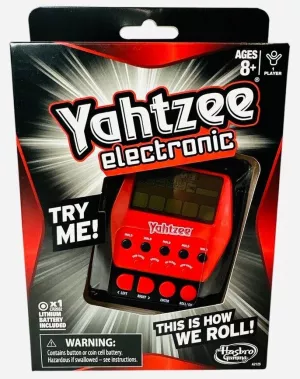
Electronic handheld Yahtzee games were the precursor to the smartphone era of full online gaming. The similarities between the two systems are obvious - both enable players to play Yahtzee on the go. Gamers could finally play in the park, for example, without the need for dice or scorecards. Hasbro dipped their toe into the waters of mobile electronic Yahtzee in 1995 with the release of the first model, and it proved to be a smash. Enthusiasts had been clamoring for new ways to play their favorite dice game and the Yahtzee handheld game scratched that itch.
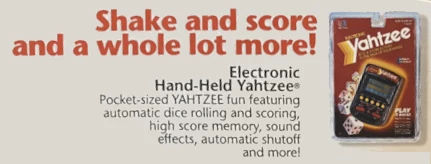
New designs and concepts for the Yahtzee handheld game continued to emerge over the following decades, including handheld versions for Yahtzee variants like Yahtzee Jr. Electronic handheld games merged the best of computer Yahtzee with the tabletop classic. Players weren’t tethered to their home computers in order to enjoy the game but still reaped the benefits of electronic scorekeeping and high score records. While they proved to be a great way to play solitaire Yahtzee, the social aspect was sorely missed. Fortunately, a solution was just over the horizon.
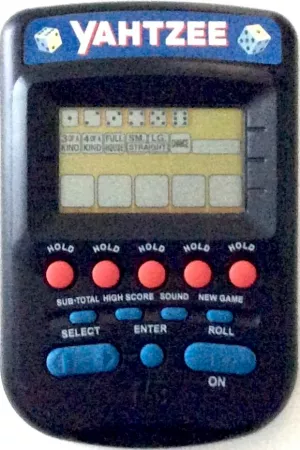
Yahtzee
Electronic Handheld
1995 - Hasbro
United States
Yahtzee
Electronic Handheld
1995 - Milton Bradley
United States
Yahtzee
Electronic Handheld
1995 - Milton Bradley
Italy
Yahtzee
Electronic Handheld
1995 - Milton Bradley
United States
Yahtzee
Electronic Handheld
1995 - Milton Bradley
United States
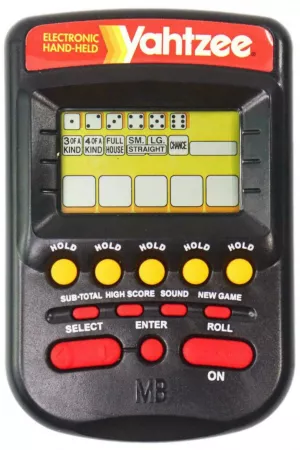
Yahtzee
Electronic Handheld
1995 - Milton Bradley
United States
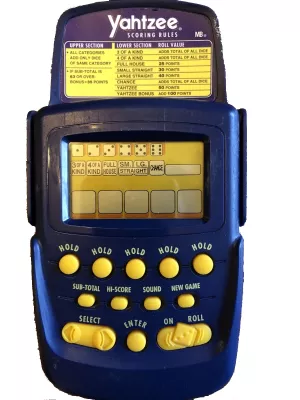
Yahtzee
Monte Carlo Edition
1995 - Milton Bradley
United States
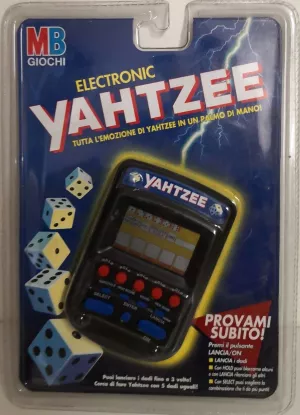
Yahtzee
Electronic Handheld
1995 - Milton Bradley
Italy
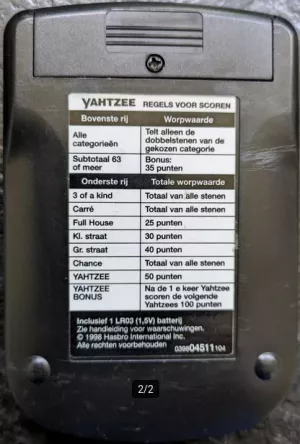
Yahtzee
Electronic Handheld
1998 - Hasbro
Netherlands
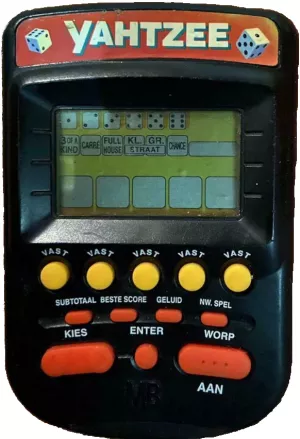
Yahtzee
Electronic Handheld
1998 - Milton Bradley
Netherlands
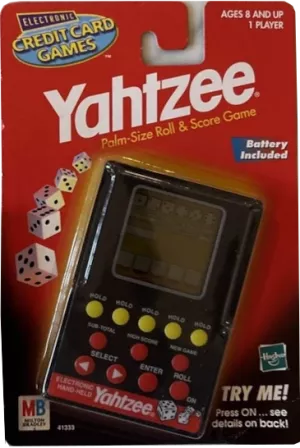
Yahtzee
Electronic Handheld
1999 - Milton Bradley
United States
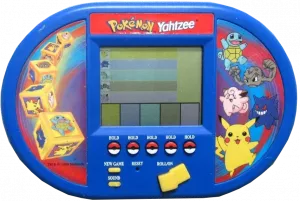
Yahtzee
Electronic Handheld – Pokemon Edition
1999 - Hasbro
United States
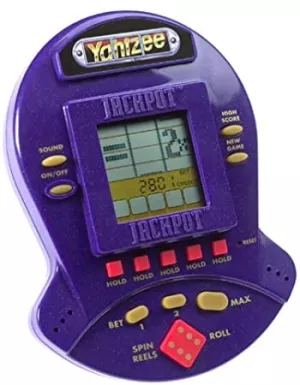
Yahtzee Jackpot
Electronic Handheld
1999 - Hasbro
United States
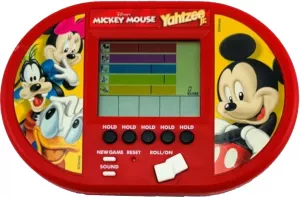
Yahtzee Jr.
Mickey Mouse Edition
2000 - Hasbro
United States
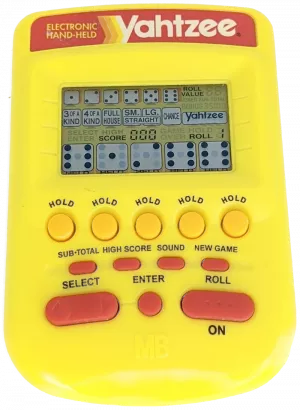
Yahtzee
Electronic Handheld
2002 - Milton Bradley
United States
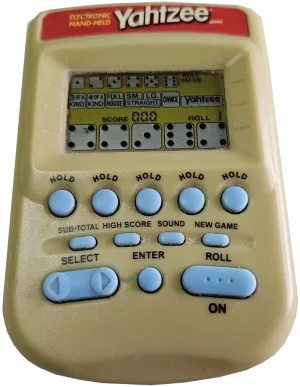
Yahtzee
Electronic Handheld
2002 - Hasbro
United States
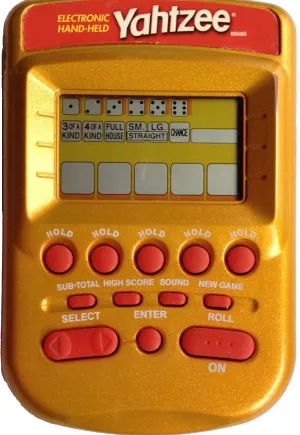
Yahtzee
Electronic Handheld
2004 - Hasbro
United States
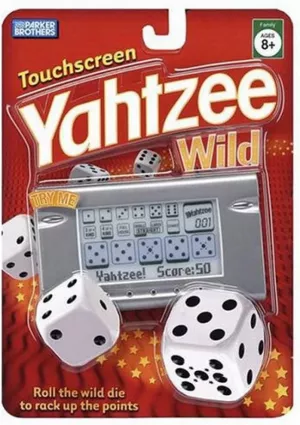
Yahtzee Wild
Electronic Handheld
2006 - Hasbro
United States
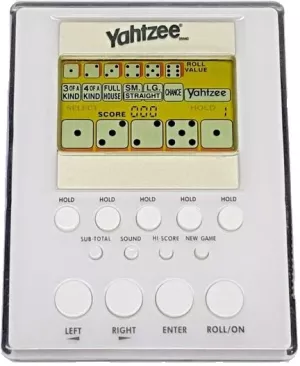
Yahtzee
Electronic Handheld
2007 - Hasbro
United States
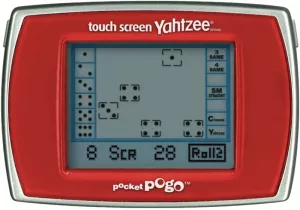
Yahtzee
Touchscreen Edition
2010 - Hasbro
United States
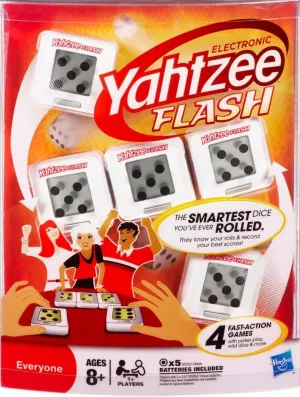
Yahtzee Flash
Electronic Handheld
2011 - Hasbro
United States
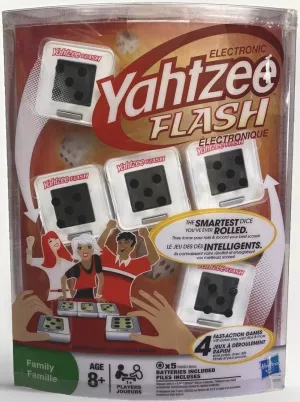
Yahtzee Flash
Electronic Handheld
2011 - Hasbro
Canada
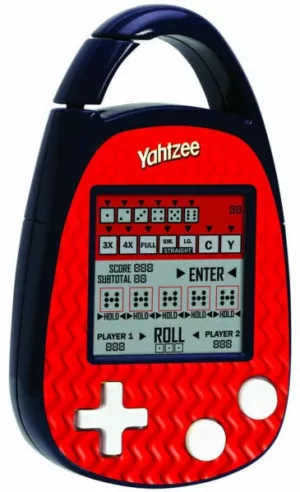
Yahtzee
Electronic Carabiner Edition
2011 - Basic Fun
United States
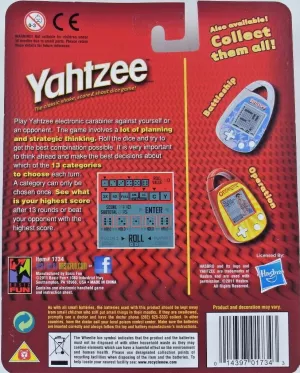
Yahtzee
Electronic Carabiner Edition
2011 - Basic Fun
United States
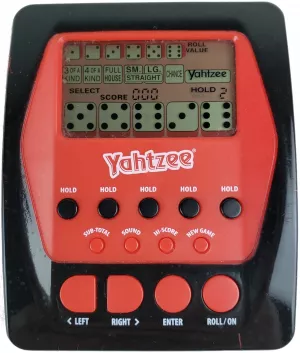
Yahtzee
Electronic Handheld
2012 - Hasbro
United States
Yahtzee
Electronic Handheld
2012 - Hasbro
United States
Yahtzee with Buddies
The dream of mobile, multiplayer electronic Yahtzee was finally within reach when the world’s first smartphone arrived in 2007. As the technology matured, developers created thousands of apps to cater to the needs of a new marketplace. The smartphone platform spurred innovation in mobile gaming and it wasn’t long before the full power of online dice was unleashed with the original Yahtzee app.
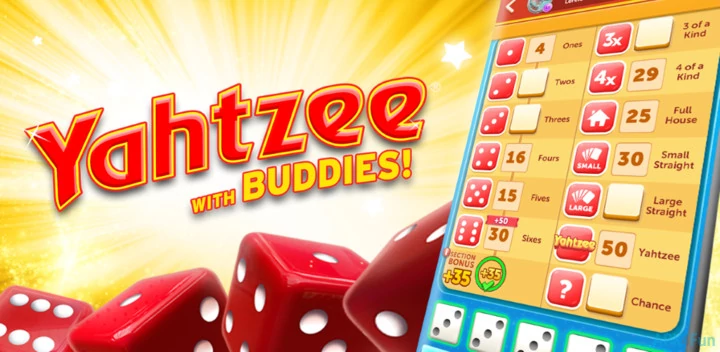
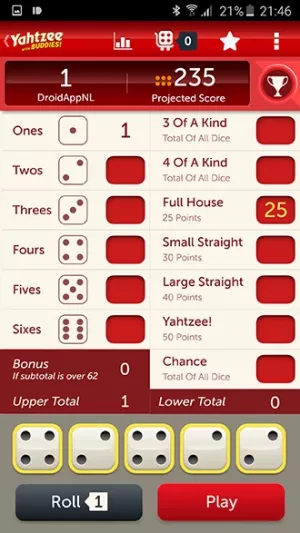
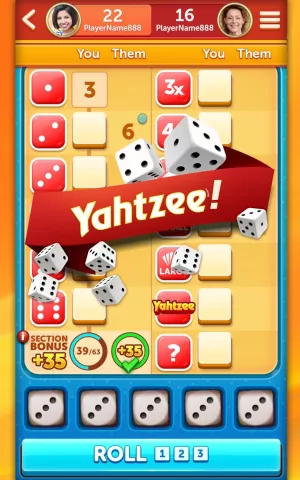
Dice with Buddies launched in 2012, embracing all that mobile internet gaming had to offer. Players now truly entered the internet age and were able to play online Yahtzee with all of the social connectivity that it provided. In addition to the standard solitaire mode that had long been common in electronic Yahtzee, the app could connect users from around the world with each other in virtual Yahtzee games. An ability to link to a player’s Facebook account and an in-game chat feature let friends roll a game from anywhere.
The app was developed by Scopely, Inc. as a Yahtzee game without the name or blessing of Hasbro. Like a long line of unofficial computer games before it, the company faced few legal risks even though it featured identical gameplay to the original. Copyright law protects games’ names and branding but the actual game mechanics remain in the public domain. Dice with Buddies was able to capitalize on the popularity of Yahtzee and became an immediate hit.
Annual sales have grown steadily since its release, a rarity in the mobile games market. That success caught Hasbro’s attention and the two companies were eventually able to conclude a licensing deal. As a result, Scopely released Yahtzee With Buddies, essentially the same game as their original app but now partnered with gaming giant Hasbro. Scopely was able to scale up quickly, outsourcing some of the development and translation work that was needed for the new international markets that it could now access through the new corporate partnership.
Yahtzee With Buddies was released in April 2015 on iOS, Android, and the Apple Watch. The app saw more than 1 million downloads in its first four days. Digital Yahtzee had rocketed to the stratosphere. Free Yahtzee single player? Yahtzee with Buddies takes it to another level with social connectivity.
Yahtzee with Buddies
Mobile App
2014 - Scopley
United States
Yahtzee with Buddies
Mobile App
2018 - Scopley
United States

Yahtzee with Buddies
Mobile App
2018 - Scopley
United States

Yahtzee with Buddies
Mobile App
2018 - Scopley
United States

Yahtzee with Buddies
Mobile App
2019 - Scopley
United States
The Future of Playing Yahtzee

Nearly half a century after its first appearance on computer screens, Yahtzee online continues to thrive as a dynamic and evolving digital experience. The road to success has included its share of missteps, including early versions with limited internet capabilities, clunky interfaces, and local-only multiplayer. Many beloved variants like Word Yahtzee, Triple Yahtzee, and World Series of Yahtzee still await proper video game adaptations. Yet the game's continued relevance is a tribute to the developers and programmers who have faithfully recreated the thrill of rolling dice in a virtual format.
Although some traditionalists still prefer the feel of physical dice and handwritten scorecards, the benefits of online Yahtzee are hard to ignore. Digital platforms have broadened the game’s appeal, making it more accessible and social than ever. Players can now connect with opponents around the world, track high scores through global leaderboards, and enjoy real-time multiplayer features that enhance both casual and competitive play.
And this is just the beginning. As virtual and augmented reality technologies advance, the next phase of Yahtzee online could bring fully immersive, three-dimensional gameplay. Picture rolling dice across a holographic board or playing in a virtual room with friends from different time zones. These possibilities are rapidly becoming more feasible, pointing to a future where Yahtzee evolves beyond screens entirely.
What sets Yahtzee apart is its remarkable ability to adapt. From physical tabletops to electronic handhelds and now to mobile apps and online platforms, the game has continuously embraced new technology without losing its core identity. As long as there is a desire to play Yahtzee online, new innovations will continue to shape how the game is experienced.
The world’s most iconic dice game has outgrown its original format, and its future remains wide open. Whether through familiar gameplay or entirely new forms yet to be imagined, online Yahtzee is well-positioned to remain a timeless favorite for generations to come.
Frequently Asked Questions
What was the first Yahtzee video game?
The first Yahtzee video game was released for the Apple II in 1978, making it one of the earliest examples of a tabletop board game adapted for personal computers.
Was the original Apple II Yahtzee game in color?
No. Despite the Apple II's advanced color graphics for its time, the 1978 Yahtzee game was presented as simple white text on a black background.
What was Gamevision?
Gamevision was a line of game cartridges released by Milton Bradley for the Texas Instruments TI-99/4 in 1979, including a faithful adaptation of Yahtzee complete with the Bonus and Joker rules.
How many Yahtzee games were released for the Commodore 64?
At least four separate versions of Yahtzee were released for the Commodore 64 between 1983 and 1991, all following standard Yahtzee rules.
What was Ultimate Yahtzee?
Ultimate Yahtzee was a 1996 Windows release that introduced game variations like Battle Yahtzee and brought the tabletop variant Triple Yahtzee to a digital format for the first time.
Was there a Yahtzee game for PlayStation 2?
Yes, Yahtzee was included in Hasbro's Family Game Night for PlayStation 2, released in 2008, which bundled six classic board games and was hosted by Mr. Potato Head.
When did electronic handheld Yahtzee games first appear?
Hasbro released the first electronic handheld Yahtzee game in 1995, letting players enjoy the game on the go without physical dice or scorecards.
What was the first popular Yahtzee mobile app?
Dice with Buddies launched in 2012 as one of the first mobile apps to bring true online, multiplayer Yahtzee to smartphones, later becoming Yahtzee with Buddies.
Is Yahtzee with Buddies an official Hasbro game?
It is now. The app was originally released by Scopely without Hasbro's involvement, since game mechanics aren't protected by copyright, but the two companies later reached a licensing agreement.
Can you legally play old Yahtzee video games today?
Many vintage Yahtzee games can be played through emulators using ROM files, though players should own the original game to legally download and play a ROM.
